
Definition and Function of Company Benefit Weight (BMP) in P3DN and Its Relationship with TKDN
Company Benefit Weight (BMP) is an appreciation value for business actors that invest and produce in Indonesia. Under the Domestic Product Utilization Enhancement (P3DN) policy, BMP may be calculated together with the Domestic Component Level (TKDN) to support the use of domestic products.
TKDN indicates the extent of domestic content in a product. BMP provides an indication of a company’s benefits to domestic industry. The two serve different functions, so BMP should not be considered an addition to a product’s domestic content.
What Is Company Benefit Weight (BMP)?
The Ministry of Industry defines BMP as an appreciation value granted to business actors that invest and produce in Indonesia. BMP may help increase the value of domestic products that already have a TKDN value. BMP is calculated up to a maximum of 15%.
BMP is assessed at the company level, while TKDN indicates domestic content in goods, services, or a combination of goods and services. Since they are assessed on different bases, the two should be viewed as complementary information rather than as the same measure.
| Aspect | TKDN | BMP |
|---|---|---|
| Focus | Domestic content in goods, services, or a combination of both | Company benefits to domestic industry |
| Indicates | The amount of domestic components used | An appreciation value for companies that meet BMP requirements |
| Role in P3DN | Serves as an indicator of domestic content | May be calculated as an additional value alongside TKDN |
| Maximum value | Based on the certification result for the product or service | Calculated up to a maximum of 15% |
Therefore, BMP is not a physical addition to a product’s TKDN. BMP is also not a measure of a product’s quality, technical specifications, or performance. Users should still check whether the product meets the project’s specifications and requirements.
What Does a Minimum TKDN + BMP of 40% Mean?
For government procurement of industrial products, the applicable provisions require the use of domestic products with a TKDN of at least 25% when there is a domestic product with a combined TKDN and BMP value of at least 40%. The provisions also set out the next steps if qualifying products are unavailable or their volumes are insufficient.
This means that 40% is not a general requirement that automatically applies to every project or product selection process. Its application depends on the relevant procurement rules, product availability, required volume, and project documents and specifications.
Example of a TKDN and BMP Calculation
| Product | TKDN | BMP | TKDN + BMP | Keterangan |
|---|---|---|---|---|
| Product A | 35% | 5% | 40% | Reaches a combined value of 40% and meets the minimum TKDN of 25% |
| Product B | 25% | 15% | 40% | Reaches a combined value of 40% and meets the minimum TKDN of 25% |
| Product C | 20% | 15% | 35% | Does not reach a combined value of 40%, and its TKDN is below 25% |
These examples show why TKDN and BMP should be considered together. However, meeting these figures does not automatically mean a product is suitable for a particular project. Specifications, availability, volume, and procurement requirements still need to be checked.
Why Is BMP Important in the P3DN Policy?
BMP can provide additional information for assessing a company’s support for domestic industry. Together with TKDN, it helps users understand a company’s contribution and a product’s domestic content in the context of P3DN.
For companies, a BMP certificate can help show that they have been assessed in accordance with the applicable requirements. For product users, TKDN and BMP information can be part of the procurement document review, especially when a project requires the use of domestic products.
BMP should not be the sole basis for product selection. Users should also match the certificate values with the relevant product, specifications, required volume, and procurement requirements.
How to Check TKDN and BMP Information
Before using a product for a project, contractors, consultants, project owners, and procurement teams can check certificate information through the Ministry of Industry’s official P3DN channel.
The information to check may include:
- company name and product type;
- product specifications or identity;
- the listed TKDN and BMP values;
- certificate number and status; and
- whether the certificate data matches the project documents.
Make sure the information refers to the relevant product and certificate. Certification values may differ depending on the product or certificate scope, so a value for one product should not be assumed to apply to all products made by the company.
Related article:
How to Check SPINDO TKDN Values on Indonesia's Official P3DN Website
TKDN and BMP for SPINDO Steel Pipe Products
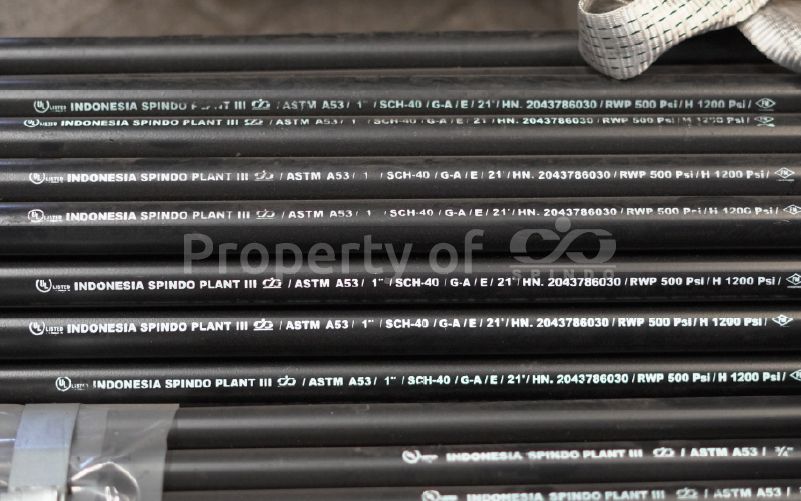
For projects that require the use of domestic products, TKDN and BMP information can help users assess supporting documents for steel pipe products. SPINDO provides product information and supporting documents according to project needs.
Users can check the relevant certification data through the Ministry of Industry’s official P3DN channel, then confirm the product specifications, availability, and documents with the SPINDO team. This helps ensure that the selected product meets the project’s technical needs and procurement requirements.
Conclusion
BMP is an appreciation value for business actors that invest and produce in Indonesia. TKDN indicates domestic content in a product, while BMP provides additional information about a company’s benefits to domestic industry. BMP is calculated up to a maximum of 15%.
In government procurement of industrial products, a combined TKDN and BMP value of at least 40% may form part of the requirements for using domestic products. The product must have a TKDN of at least 25%, and product availability and volume must also be considered.
Understanding the difference between TKDN and BMP helps companies and product users interpret certification information correctly. For project needs, check certificate data, specifications, and procurement requirements thoroughly before selecting a product.
Use SPINDO steel pipe products to support your project needs. Contact the SPINDO team for product information, technical specifications, and supporting documents tailored to your project requirements.
Frequently Asked Questions (FAQ)
What is BMP in TKDN?
BMP stands for Company Benefit Weight. It is an appreciation value for business actors that invest and produce in Indonesia. BMP may be calculated together with TKDN under the P3DN policy.
Is BMP the same as TKDN?
TKDN indicates domestic content in goods or services. BMP is an appreciation value that assesses a company’s benefits to domestic industry.
What is the maximum BMP value?
BMP is calculated up to a maximum of 15%.
Can BMP replace TKDN?
BMP does not replace TKDN. Under the requirements for using industrial products in government procurement, TKDN must still meet the applicable minimum threshold.
What does a minimum TKDN + BMP of 40% mean?
In the context of government procurement of industrial products, this provision refers to domestic products with a combined TKDN and BMP value of at least 40%, and a TKDN of at least 25%. Its application also depends on product availability and volume.
Do TKDN and BMP values apply to every product made by a company?
Not necessarily. Certification data must be checked against the relevant product and certificate scope. Do not assume that a value for one product applies to every product made by the company.
Where can TKDN and BMP values be checked?
Information can be checked through the Ministry of Industry’s official P3DN channel. Make sure the product identity and certificate status match the project’s requirements.