
How to Measure and Calculate Pipe Weight: A Complete Guide to Diameter, Thickness, and Formulas
Measuring pipe weight is often considered a complex technical task, especially for those who are not familiar with measuring tools or engineering calculations. Many people assume that the easiest way is to simply weigh the pipe directly. However, in industrial practice, this method is rarely used.
Instead, pipe weight is typically calculated based on its physical dimensions.
This means you need to know the pipe’s diameter and thickness first, before calculating its weight using specific formulas.
This approach is far more efficient, especially when dealing with large quantities of materials. By understanding this method,
you can estimate material requirements more accurately and avoid mistakes in purchasing or usage.
Why Pipe Weight Is Not Always Measured Using a Scale
For small-scale applications, weighing a pipe might still be possible. However,
in industrial projects, this method is not practical. Some key reasons include:
- Pipes are usually purchased in large quantities
- Not all materials can be weighed directly on-site
- Estimations are often required before purchasing
Because of this, calculating weight based on dimensions becomes a more effective solution. Additionally, performing your own calculations allows you to verify the product specifications you receive.
What Dimension Need to Be Measured?
Before calculating the weight, there are two essential parameters that must be known:
- Pipe diameter (for round pipes) or side dimensions (for square/hollow pipes)
- Pipe thickness
These two measurements are the foundation for determining pipe weight. In practice, however, pipe dimensions are not always perfectly consistent. Manufacturing tolerances can result in slight variations at different points. This is why direct measurement is still necessary, even when factory specifications are available.
How to Measure Pipe Diameter Accurately
For round pipes,
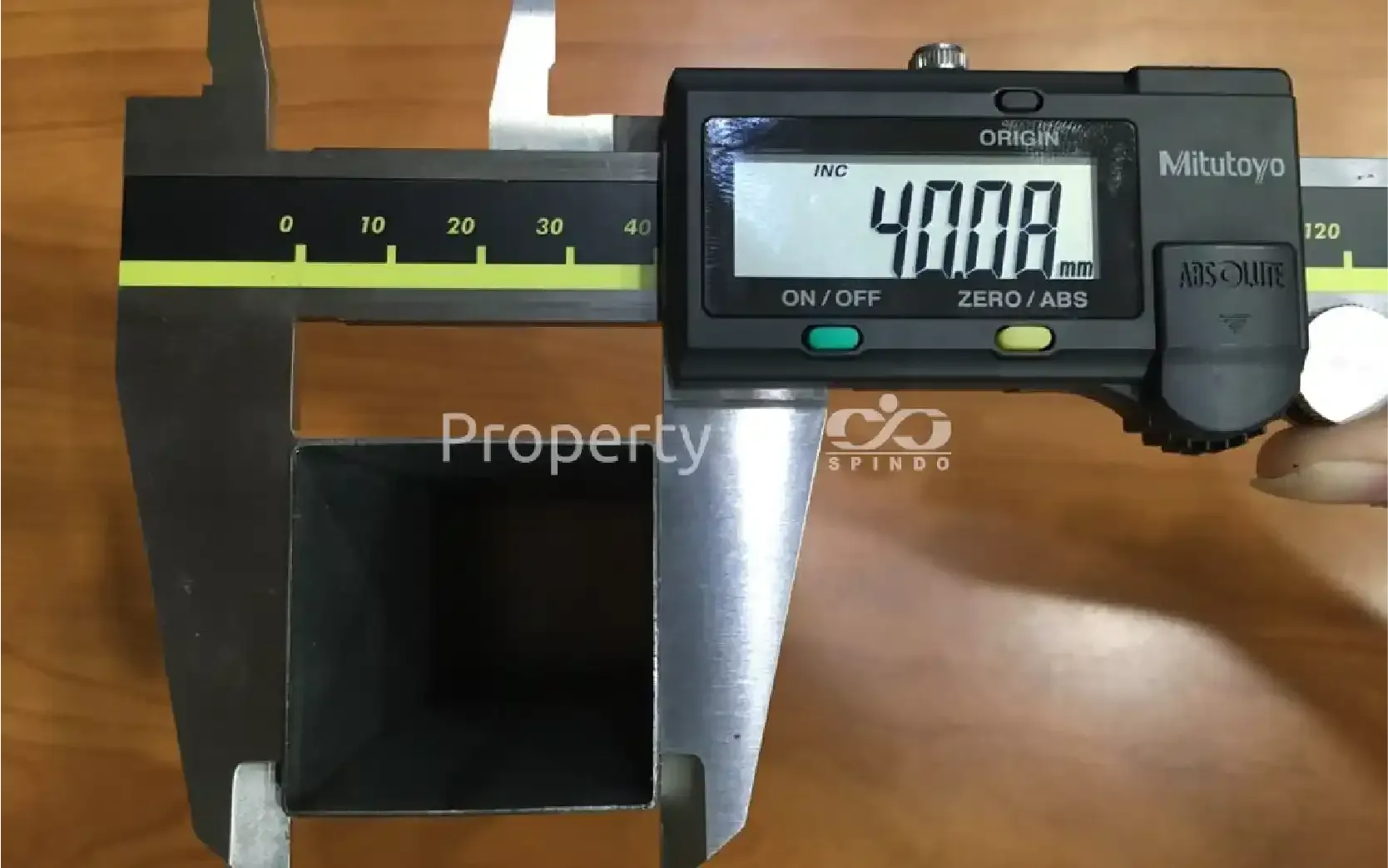
the outer diameter is typically measured using a vernier caliper, either digital or manual.
However, measurement should not be done at just one point. Recommended steps:
- Measure at 4 different positions (0°, 45°. 90°, and 135° relative to the weld seam)
- Record all measurement results
- Calculate the average value
Why measure multiple points?
- Pipes are not always perfectly round
- Weld areas may have slight dimensional variations
- Reduces the risk of biased measurement results
For square or hollow pipes:
- Measure two sides (length and width)
- Express the result as dimensions
This approach ensures that the measurement reflects the actual condition of the pipe.
How to Measure Pipe Thickness Properly
Once the diameter is known,
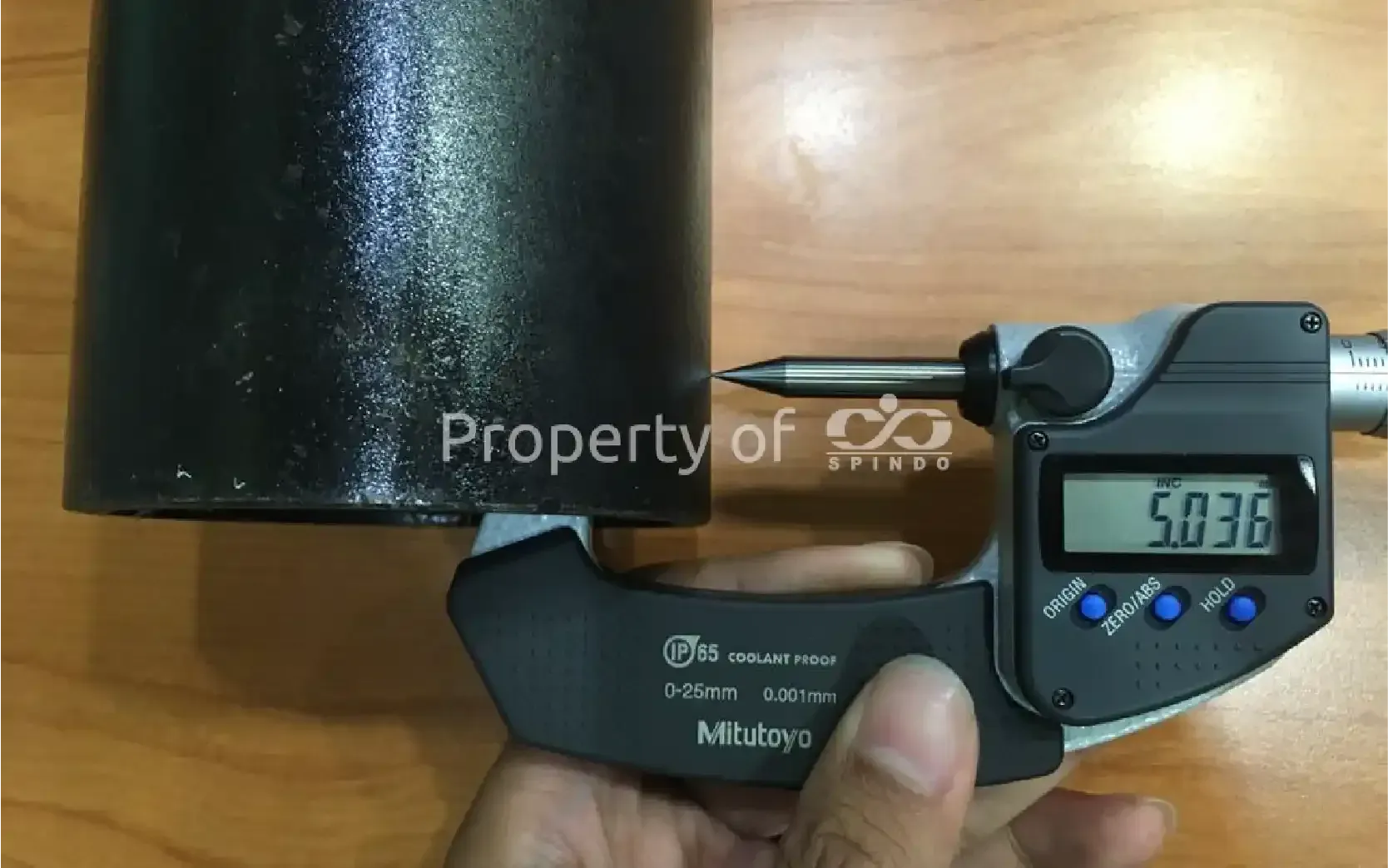
the next step is measuring the pipe thickness. This is critical because thickness directly affects both strength and weight.
Common tools used:
- Digital micrometer
- Dial caliper
Proper measurement method:
- Take at least 3 measurements at different points
- Ensure the tool is positioned perpendicular to the pipe surface
- Use the average value as the final result
Common mistakes in the field:
- Measuring only once
- Incorrect tool positioning
- Ignoring small variations between points
In reality, pipe thickness may slightly vary across different areas. Without repeated measurements, the results may not be accurate.
Common Tools Used for Pipe Measurement
Choosing the right measuring tools plays a significant role in achieving accurate results.
Tools commonly used to measure pipes include:
- Vernier Caliper
- Measures outer diameter, inner diameter, and depth
- Available in digital and manual versions
- Suitable for general measurements
- Dial Caliper
- Uses an analog dial indicator
- Easier to read compared to manual vernier
- Ideal for field use
- Digital Micrometer
- Used for measuring thickness
- Offers high precision
- Commonly used in quality inspection
Using the appropriate tool will make the measurement process faster and more reliable.
How to Calculate Pipe Weight from Measurements
After obtaining all necessary dimensions, the next step is calculating the pipe weight.
- For round pipes:
- W = ((D - t) x t) x (0,02466 x (p/1000))
Description:
W = Pipe weight (kg)
D = Pipe diameter (mm)
t = Pipe thickness (mm)
p = Pipe length (mm)
- For square (hollow) pipes:
- W = ((((LS + WS) x 2)/3.14) - t) x ((t x 0.02466 x p) / 1000)
Description:
W = Pipe weight (kg)
LS = Length of side (mm)
WS = Width of side (mm)
t = Pipe thickness (mm)
p = Pipe length (mm)
Important point to understand:
- Large diameter or dimension, heavier the pipe
- Thicker pipe, heavier the pipe
- Pipe length also affects total weight
By understanding these concepts, you don’t necessarily need to memorize formulas, you can estimate weight logically.
Why Pipe Quality Affects Measurement Accuracy
Many assume measurement errors come from tools, but in many cases, the issue lies in the pipe quality itself.
Low-quality pipes may have:
- Uneven thickness
- Inconsistent diameter
- Large dimensional tolerances
As a result:
- Measurement results vary significantly
- Difficult to obtain a stable average value
- Weight calculations become unreliable
On the other hand, high-quality pipes have more precise and consistent dimensions.
As a leading steel pipe manufacturer in Indonesia,
PT STEEL PIPE INDUSTRY OF INDONESIA Tbk
(SPINDO) applies strict production standards and quality control processes to ensure consistent dimensions across its products.
With higher
precision, measurement becomes easier and weight calculations become more reliable. This level of consistency is especially important in industrial projects that require high accuracy and dependable material performance.
The Impact of Inaccurate Measurements in Projects
Small measurement errors can lead to significant consequences, especially in large-scale projects. Potential risks include:
- Material shortages or excess
- Inaccurate cost estimation
- Mismatch with technical design
- Structural performance issues
Therefore accurate measurement is not just a technical requirement, it directly affects project efficiency and success.
Conclusion
Measuring pipe weight is not done by direct weighing, but through a process that involves dimensional measurement and calculation. This process includes:
- Measuring diameter or pipe dimensions
- Measuring thickness
- Calculating weight using formulas
The key lies in measurement accuracy and using high-quality materials.
With proper methods and precise products, the results will be more accurate and reliable.
By understanding this process, you can not only calculate pipe weight correctly but also ensure that the materials used meet the requirements of your project.