
Steel Pipe Certification in Indonesia for Government and Private Projects
In construction an infrastructure projects, material selection is not determined only by price and availability, but also by quality assurance and compliance with recognized standards. One of the most critical components in many developments is the steel pipe.
In both
government and private projects, steel pipe certification serves as a primary indicator of quality, safety, and technical accountability.
Without proper certification, material failure may lead to project delays, cost overruns, and potential contractual disputes.
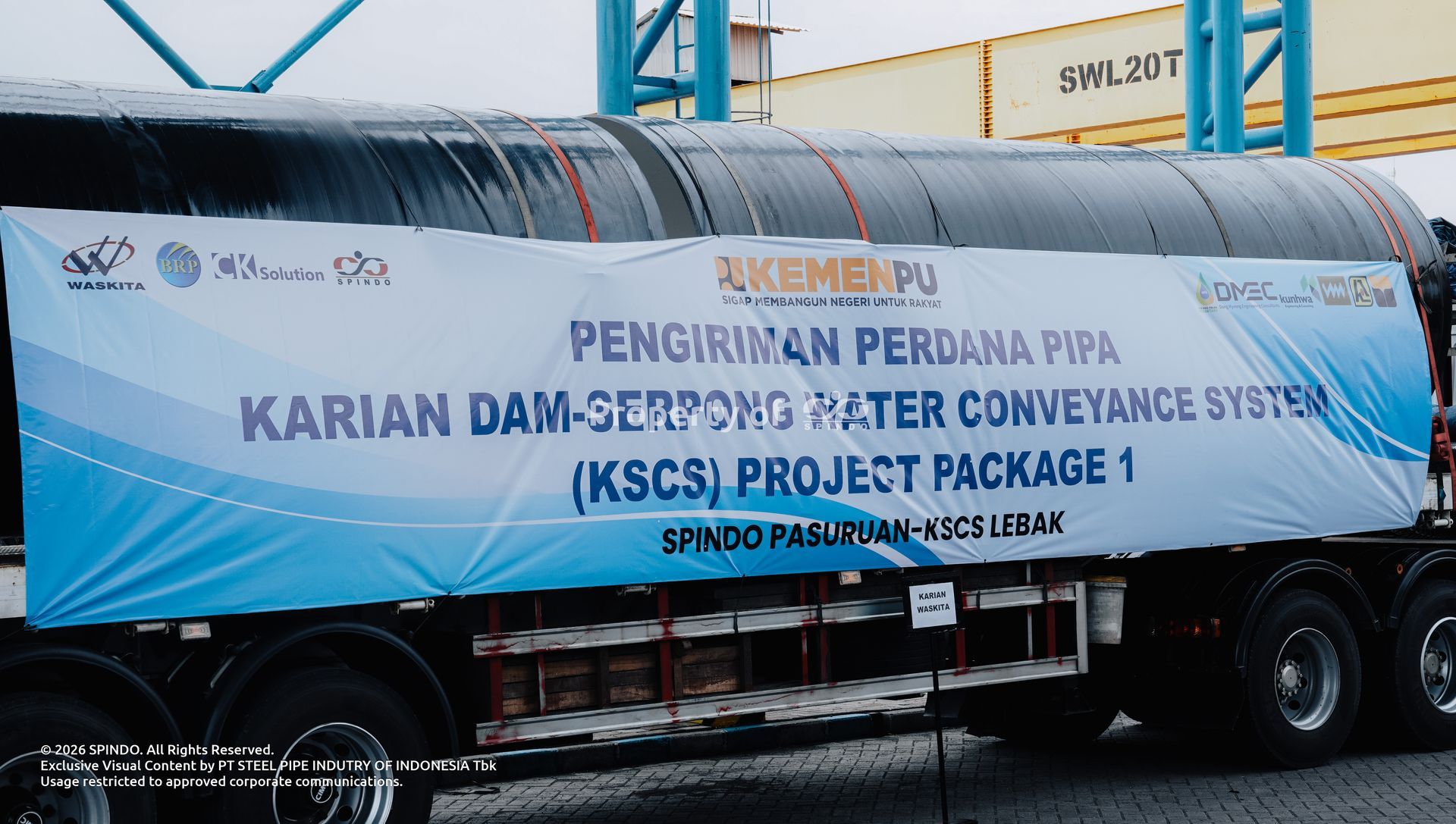
Why Is Steel Pipe Certification Important?
Steel pipes are widely used in strategic applications, including:
- Clean water distribution systems
- Gas pipeline networks
- Industrial infrastructure
- Building construction projects
- Ports and logistics facilities
In
government projects, certification is often a mandatory requirement in procurement and tender processes. In
private projects, certification functions as a risk mitigation tool and provides quality assurance
to project owners and investors.
Steel pipe certification ensures that the product:
- Compiles with applicable technical standards
- Has undergone quality testing
- Is manufactured under a documented quality control system
- Meet project-specific technical requirements
Certification is not merely an administrative label, it is objective proof of product quality and compliance.
Supporting Documents for Steel Pipe Certification
The validity of steel pipe certification is typically supported by official documentation, including:
- Certification from Independent Certification Bodies
This document confirms that the product has been verified by an authorized third party in accordance with national or international standards.
- Mill Certificate
A mill certificate provides detailed technical information such as:
- Chemical composition
- Mechanical test results (tensile strength, yield strength, and related parameters)
- Dimensional specifications
- Production batch number
These documents ensure transparency, traceability, and accountability for every steel pipe used in a project.
National Standard: SNI 0039 for Welded Steel Pipes
In Indonesia, one of the most commonly applied standards for welded steel pipes is
SNI 0039. This certification confirms compliance with Indonesian National Standards for applications such as:
- Public infrastructure;
- Water distribution systems;
- Gas pipelines
In
government-funded projects, SNI certification is often a regulatory requirement. In
private developments, compliance with SNI enhances credibility and strengthens confidence in product quality.
International Standards: ASTM A252 and JIS G3466
Beyond national standards, certain projects–particularly large-scale developments or those involving foreign investors– require compliance with international standards.
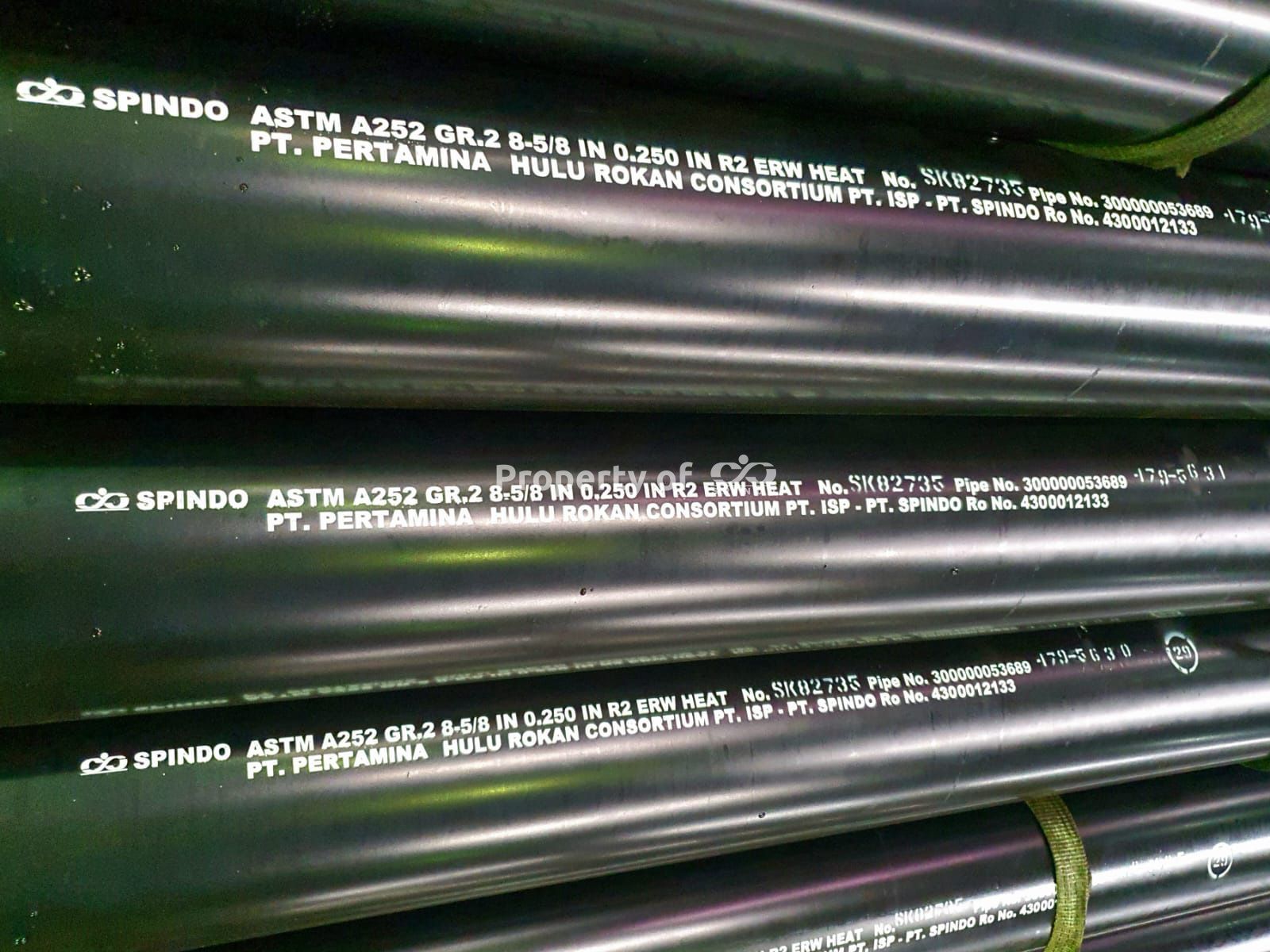
- ASTM A252
Issued by the American Society for Testing and Materials (ASTM), ASTM A252 is commonly specified for:
- Steel pipe piles
- Port and dock construction
- Structural foundations
This standard focuses on structural strength and load-bearing performance.
- JIS G3466
JIS G3466 is a Japanese Industrial Standard for square and rectangular hollow structural steel pipes. It is commonly used for:
- Building frames
- Canopies
- Fences
- Stair railings
This certification ensures dimensional accuracy and structural integrity for architectural and construction applications.
Production Methods and Surface Protection
Steel pipe quality is also influenced by the manufacturing method. Two primary welding methods are widely used:
- ERW (Electric Resistance Welding) for high-precision welded pipes with specific diameters
- SSAW (Spiral Submerged Arc Welding) for large-diameter pipes used in major infrastructure projects
Steel pipes are also available in different surface conditions:
- Coated steel pipes for corrosion protection
- Uncoated steel pipes depending on application requirements
The selection of production methods and surface treatment must align with the technical specifications and environmental conditions of the project.
SPINDO as a National and International Certified Steel Pipe Manufacturer
As a leading steel pipe manufacturer in Indonesia, PT STEEL PIPE INDUSTRY OF INDONESIA Tbk (SPINDO) holds various national and international certifications to support both government and private projects.
SPINDO steel pipe products comply with standards such as:
- SNI 0039 for domestic regulatory requirements
- ASTM A252 for structural and piling applications
- JIS G3466 for hollow structural steel pipes
Supported by strict quality control systems, ERW and SSAW production processes, and complete mill certificates for every product,
SPINDO ensures that each steel pipe produced meets recognized technical standards.
This commitment to certification
reflects SPINDO’s role in supporting safe, reliable, and sustainable infrastructure development.
Conclusion
In government and private projects, steel pipe certification
is not merely an administrative requirement, but a fundamental foundation for ensuring quality, safety, and compliance.
National standards such as SNI 0039 and international standards such as ASTM A252 and JIS G3466 provide assurance that steel pipes meet relevant technical requirements for their intended applications.
By selecting certified steel pipe from a qualified manufacturer such as SPINDO,
project stakeholders can minimize technical risks, strengthen accountability, and ensure long-term infrastructure reliability.