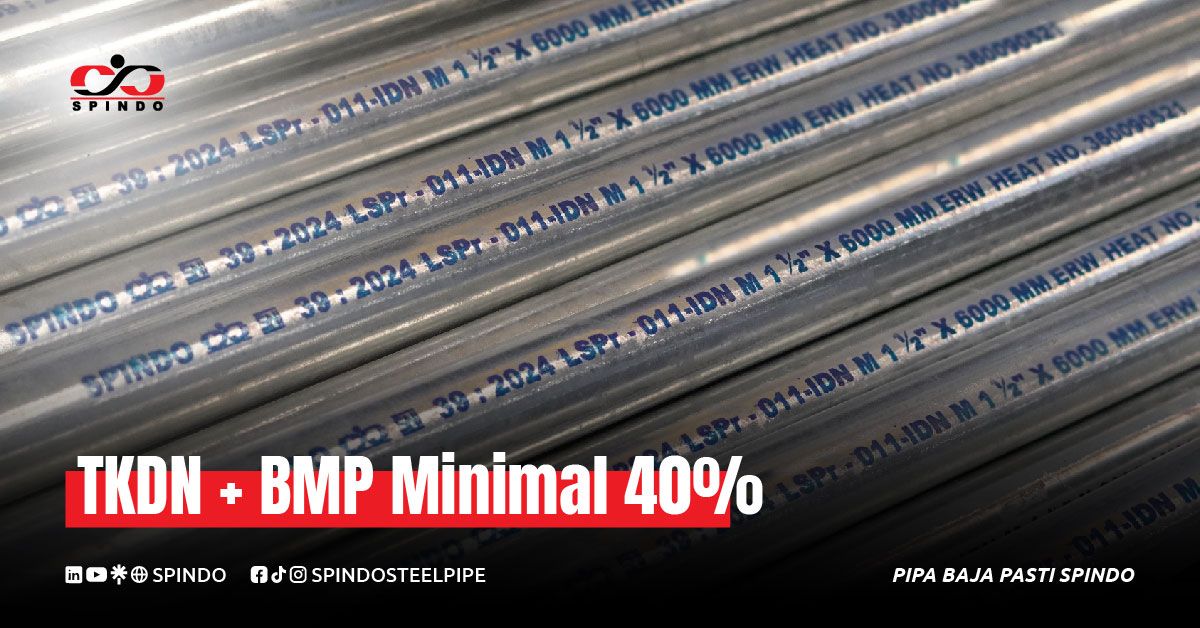

TKDN + BMP Minimum 40%: Meaning and Application in Government Procurement
In government goods/services procurement, the term TKDN + BMP minimum 40% is often used when discussing the prioritization of domestic products.
Simply put, this provision means that a domestic product may qualify for a certain priority level if it has a TKDN value of at least 25% and a combined TKDN and BMP value of at least 40%.
This means that the 40% threshold does not stand alone. The product must still meet the required minimum TKDN value.
The provisions on the use of domestic products in government goods/services procurement currently refer, among others, to Presidential Regulation No. 46 of 2025, which is the second amendment to Presidential Regulation No. 16 of 2018 concerning Government Procurement of Goods/Services. The regulation has been effective since April 30, 2025.
What Does TKDN + BMP Minimum 40% Mean?
TKDN, or Domestic Component Level, indicates the proportion of domestic content contained in a product or service.
Meanwhile, BMP, or Company Benefit Weight, is an assessment value awarded to industrial companies that invest and conduct production activities in Indonesia.
In the context of government procurement, both values can be used together to determine the priority of domestic products. The key requirement to understand is:
Minimum TKDN of 25% and combined TKDN + BMP of at least 40%.
Therefore, BMP does not replace TKDN. A product must still meet the minimum TKDN requirement before the combination of TKDN and BMP can be applied under this provision.
Read also:
Differences Between TKDN and BMP: Which Is More Important in Procurement?
Why Is a Minimum TKDN of 25% Still Important?
The requirement for TKDN + BMP to reach at least 40% does not mean that the BMP value can be used to fully compensate for a low TKDN value.
TKDN and BMP measure different aspects. TKDN relates to the domestic content of a product or service, while BMP relates to a company’s contribution to the development of the national industry. Therefore, the minimum TKDN threshold remains an important part of applying this provision.
Under the latest certification regulation, the BMP value that can be taken into account is capped at 15%. This provision is stipulated in Minister of Industry Regulation No. 35 of 2025 concerning the Provisions and Procedures for the Certification of Domestic Component Level and Company Benefit Weight.
What Is the Role of TKDN + BMP in Government Procurement?
TKDN and BMP values are used to support the implementation of domestic product utilization policies in the procurement process.
For procurement teams, contractors, consultants, and project owners, this information helps identify whether a product meets the domestic product requirements specified in the procurement process.
However, TKDN and BMP are not the only factors considered when selecting a product. Products must also meet other requirements, including:
- technical specifications;
- product standards;
- production capacity;
- required volume;
- delivery schedule;
- document completeness;
- administrative requirements; and
- provisions stated in tender or contract documents.
Therefore, compliance with TKDN and BMP requirements should be considered together with technical, commercial, and administrative evaluations.
Does TKDN + BMP of 40% Automatically Mean a Product Will Be Selected?
TKDN and BMP values indicate a product’s position within the implementation of domestic product utilization policies, but they do not automatically determine whether a product will be selected in a procurement process. The product must still meet the technical requirements and project specifications.
For example, a product with an appropriate TKDN value must still comply with material standards, specifications, production capability, quality requirements, delivery schedules, and other conditions stipulated in the procurement documents.
How Does This Requirement Apply to Steel Pipe Procurement?
Steel pipes are used in various sectors, including construction, infrastructure, water networks, utilities, energy, oil and gas, and industrial facilities.
For projects that implement domestic product utilization policies, TKDN information may be one of the aspects reviewed during the procurement process. However, verification should not be based solely on the company name or brand.
TKDN certificates have a specific scope. Their values may vary depending on the product type, material, specifications, production process, and the scope stated in the certificate.
Therefore, users need to ensure that the product to be used matches the information stated in the valid TKDN certificate.
Read also: Why Is TKDN for Steel Pipes Important for Infrastructure Projects?
How to Check TKDN and BMP Values
TKDN and BMP information should be verified through official sources and valid certification documents. Some of the information that should be checked includes:
- company name;
- product name;
- product type;
- product specifications;
- TKDN value;
- BMP value, if stated;
- certificate number; and certificate validity period.
Minister of Industry Regulation No. 35 of 2025 also stipulates that TKDN and/or BMP values stated in certificates are included in the inventory list of domestically produced goods or services available on the official website of the Ministry of Industry.
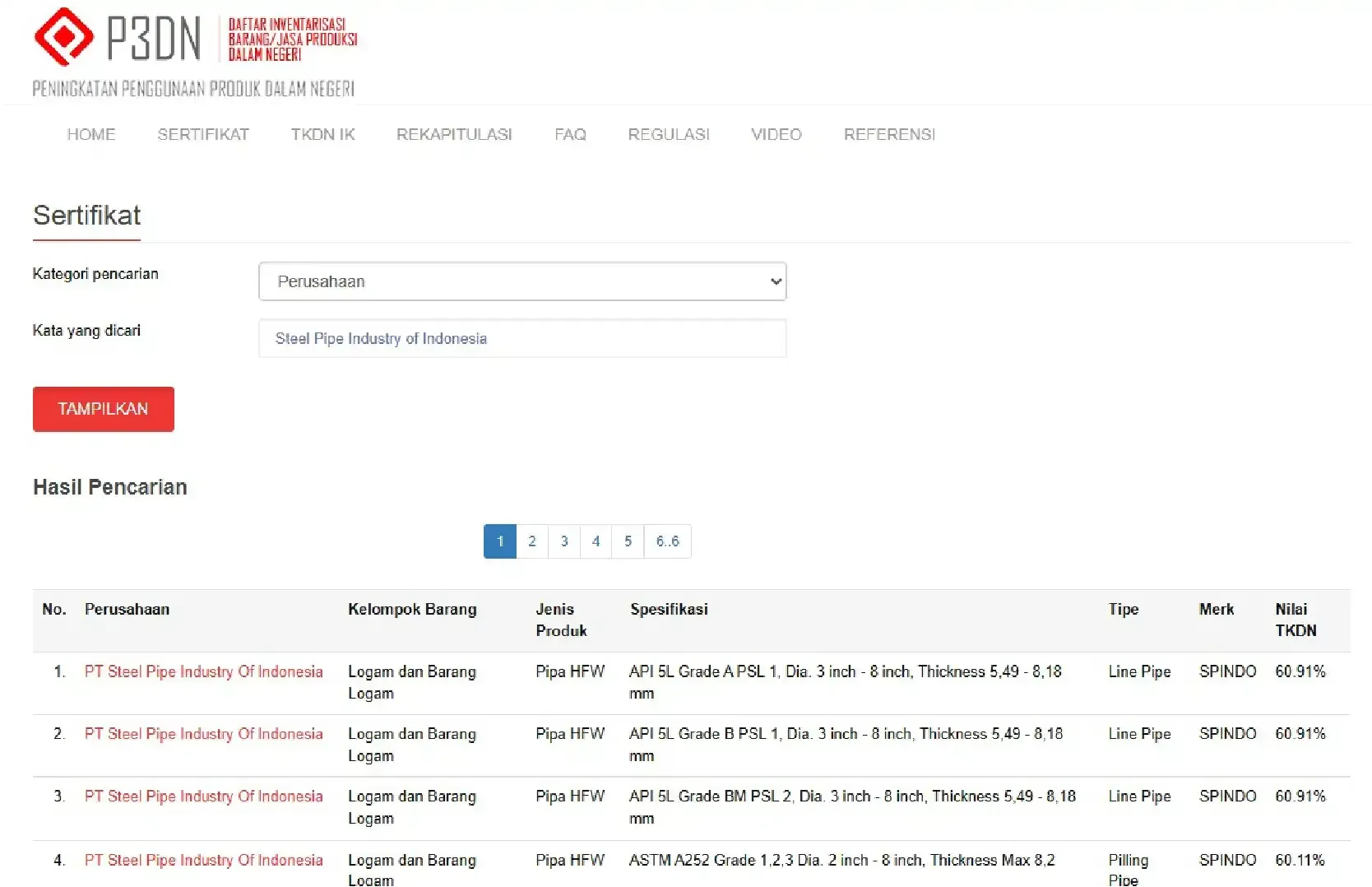
TKDN for SPINDO Steel Pipe Products
As a national steel pipe manufacturer, PT STEEL PIPE INDUSTRY OF INDONESIA Tbk (SPINDO) provides a wide range of steel pipe products for construction, infrastructure, water distribution, utilities, energy, oil and gas, automotive, and various other industrial sectors.
Several SPINDO products have TKDN certificates that can be verified through the official P3DN channel of the Ministry of Industry.
The TKDN value of each product may vary depending on its type, specifications, production process, and certificate scope.
Therefore, before selecting materials for a project, users need to match the product to be used with the applicable TKDN certificate.
In this way, steel pipe selection considers not only domestic product utilization requirements but also the product’s suitability for the technical needs of the project.
Conclusion
TKDN + BMP minimum 40% refers to the requirement for domestic products to have a TKDN value of at least 25% and a combined TKDN and BMP value of at least 40%.
TKDN indicates the domestic content of a product or service, while BMP relates to the benefits or contributions provided by a company to the development of the national industry. They serve different functions and do not replace one another.
In government goods/services procurement, TKDN and BMP information can help users evaluate whether a product aligns with domestic product utilization policies. However, product selection must still take into account technical specifications, standards, production capacity, documentation, and applicable procurement requirements.
For steel pipe project requirements, the TKDN values and certificates of SPINDO products can be verified through the official P3DN channel of the Ministry of Industry. Customers may also contact the SPINDO team to obtain product information, technical specifications, and supporting documents according to project requirements.
FAQ About TKDN + BMP Minimum 40%
What does TKDN + BMP minimum 40% mean?
TKDN + BMP minimum 40% means that the combined TKDN and BMP value reaches at least 40%, while the product’s TKDN value must be at least 25%.
Does TKDN still have to be at least 25%?
Under the provision discussed in this article, the product’s TKDN value must still be at least 25%. BMP does not replace the minimum TKDN requirement.
What is the maximum BMP value?
Under Minister of Industry Regulation No. 35 of 2025, the BMP value that can be taken into account is capped at 15%.
Can BMP replace TKDN?
TKDN and BMP have different functions and assessment objects. BMP can be used together with TKDN under certain provisions, but it does not change the product’s TKDN value.
Does TKDN + BMP of 40% automatically mean a product will be selected?
The product must still meet technical specifications, standards, project requirements, document requirements, and other applicable procurement provisions.
Does the TKDN + BMP 40% requirement apply to all private procurement?
This article specifically discusses its application in the context of government goods/services procurement. Private procurement may have different internal, contractual, or sector-specific requirements.
Where can TKDN values be checked?
TKDN values should be verified through the official channels of the Ministry of Industry by matching the company, product, specifications, TKDN value, certificate number, and certificate validity period.